A Bluetooth earphone comes down to four things: the form (true wireless, neckband or over-ear headset), the real battery life, how good the microphone is on calls, and how far the sound lags behind the picture. The rest of the spec sheet mostly helps you choose between two similar models. Here is how to read those figures, and when wired earphones are still the better pick.
True wireless, neckband or headset: three forms, three uses
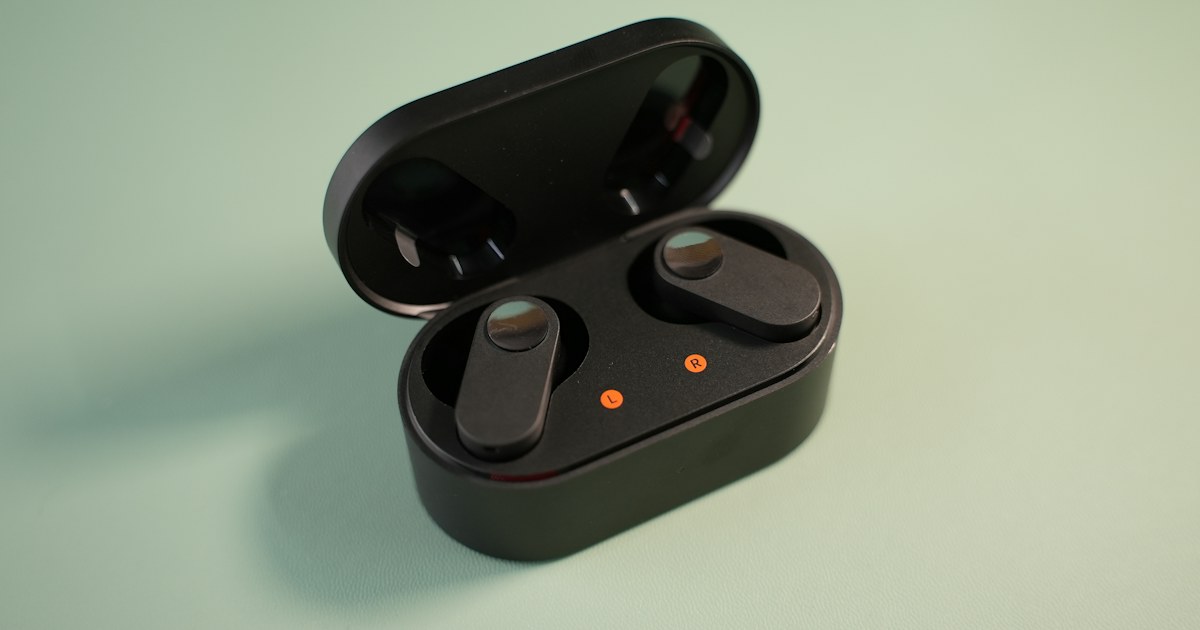
True wireless (TWS) earbuds are two separate buds stored in a case that recharges them. They fit in a pocket and you forget you are wearing them, but each bud carries a tiny battery. The Foneng BL151 spec sheet lists 25 mAh per bud and 250 mAh for the case. The case is what makes the total battery life.
A neckband joins the two earpieces with a cable that rests on the back of the neck, with the battery and buttons in the rear part. When you take one earpiece out, it hangs on your chest instead of falling to the ground. It is the safest form for sport and for working on the move. The Oryx CNB-110 neckband earphones weigh about 32 g and are rated IPX5.
A headset (on-ear or over-ear) houses a much bigger battery and bigger drivers. It is bulkier, but it lasts for days and is easier on the ears over long sessions, since nothing goes into the ear canal. The range of Bluetooth headsets covers this use.
| Form | Strengths | Limits | Where it wins |
|---|---|---|---|
| True wireless | Compact, charging case, no cable | Small battery in each bud, easy to lose | Commuting, short calls, everyday use |
| Neckband | Cannot fall, physical buttons, light | No case, must be charged itself | Sport, work on the move |
| Headset | Long battery life, large drivers, comfort over time | Bulky, warm in summer | Home, office, long journeys, films |
Battery life: the buds on one side, the case on the other
On a true wireless model two figures matter, and spec sheets often push the bigger one. The first is listening time on one charge of the buds. The second is the total time including recharges in the case.
A concrete example: the Xiaomi Redmi Buds 6 Play are rated 7.5 h per charge and 36 h with the case. So you get 7.5 h of continuous listening at most, then the buds must go back in the case. A 30 h or 38 h figure on the box is never continuous playback.
For a two-hour journey, 4 to 5 h per charge is enough. For an office day with calls, aim for 6 h or more per charge. These times are measured at moderate volume: the Baseus WM01 sheet says about 5 h at 70 % volume. At full volume, battery life drops.
Headsets are in another league. The Oraimo BoomPop Lite headset is rated up to 65 h, and keeps a 3.5 mm AUX input so you can carry on listening with a cable when the battery is flat.
Calls: ENC and ANC do different jobs
The two acronyms look alike but serve different people.
- ENC (Environmental Noise Cancellation) processes the microphone signal. It reduces the noise around you so the person on the line hears your voice better. It changes nothing in what you hear.
- ANC (Active Noise Cancellation) processes what reaches your ears. Microphones pick up outside noise and the earphones play an inverted signal to reduce it, mostly low, steady sounds (engines, ventilation).
A model that advertises noise reduction on calls is doing ENC, not ANC. That is the case of the Black Shark T11 earbuds and the BoomPop Lite, both listed with ENC for calls. If you want to block out noise, check that the spec sheet says ANC in so many words.
Without ANC, isolation depends on the shape. An in-ear bud with silicone tips seals the canal and already cuts some noise. A semi-in-ear bud that sits at the entrance of the ear, like the Black Shark T24, lets more ambient sound through, which is useful in town to hear traffic.
Bluetooth version, codecs and latency for video and games
The Bluetooth version (5.0, 5.3, 5.4) mostly affects link stability and power use. The recent models in the Bluetooth earphones range are 5.3 or 5.4. Your phone has to be recent too, since the link always runs at the lower version of the two devices.
Sound quality and lag depend more on the codec. SBC is the baseline codec every device can play. AAC is the codec iPhones favour. A model that supports both, like the Baseus WM01, works well with either family of phones.
Lag is barely noticeable with video, because playback apps usually compensate for the audio delay. It shows in games, where the sound of a shot or a jump arrives after the picture. Some models offer a low-latency mode you switch on, as the Black Shark T11 and the BoomPop Lite do. For gaming on PC or console, a wired gaming headset is still the lag-free option.
Two more spec lines worth reading:
- Multipoint: connection to two devices at once, for example a laptop and a phone. The BoomPop Lite and the Oraimo Necklace Lite neckband list it.
- Profiles: A2DP for stereo music, AVRCP for playback controls, HFP and HSP for calls. A model that lists all of them handles both music and phone calls.
Water resistance: reading the IP code
The IP code has two digits. The first is for dust, the second for water. An X in place of the first digit means dust was not tested.
- IPX4: splashes, sweat, light rain.
- IPX5: water jets. Fine for sport and heavy sweating.
- IP54: protected against dust and splashes. That is the rating of the Honor Choice Earbuds X7 Lite.
- IPX7: brief immersion. Only this level survives a drop into water.
None of these ratings covers the shower or the pool. And the charging case is almost never protected: put wet buds back in only once they are dry.
Fit in the ear
A bud that falls out gets lost, and a badly seated bud sounds hollow, with no bass. With in-ear buds, try the tip sizes in the box: the right tip seals the canal without pressure. If tips bother you, a semi-in-ear bud is more comfortable, at the cost of weaker isolation. For running or the gym, a neckband saves you hunting for a bud under a bench.
When wired earphones still win
A wired model has no battery, no pairing and no lag. It remains the logical choice for gaming, for a device without Bluetooth, or as a spare pair. Check your phone’s socket first: many recent models no longer have a 3.5 mm jack. In that case pick a USB-C model such as the Oraimo Type-C earphones. The range of wired earphones has both connectors.
Our advice
- Commuting and daily use: true wireless with Bluetooth 5.3 or 5.4 and at least 5 h per charge. The Redmi Buds 6 Play or the Honor X7 Lite fit this need.
- Sport: an IPX5 neckband like the Oryx CNB-110, or well-fitted IP54 true wireless buds.
- Office calls: a model with ENC and multipoint to switch between laptop and phone.
- Long sessions, films: a Bluetooth headset with long battery life and an AUX input as backup.
- Gaming: a low-latency mode at the very least, a wired headset to remove lag altogether.
- Phone without a jack: USB-C wired earphones rather than an adapter.


