Before buying a recorder, look at the cable that runs, or will run, to each camera. A coaxial cable calls for a DVR. An RJ45 network cable calls for an NVR.
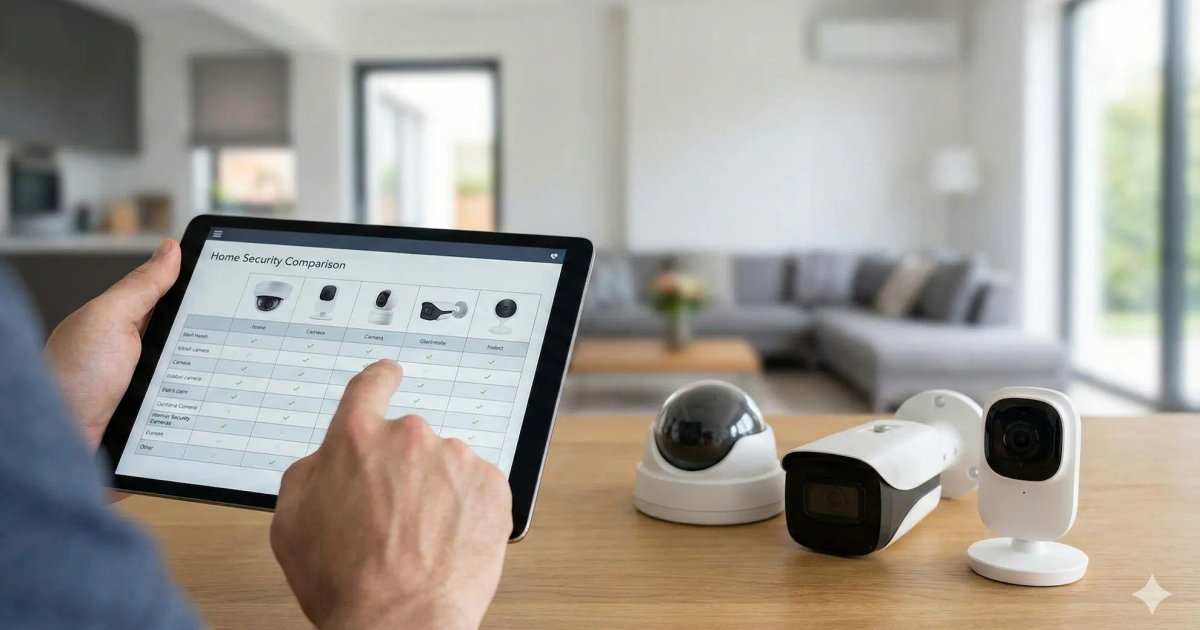
This guide is about the box that records. Cameras themselves are listed in the security cameras category.
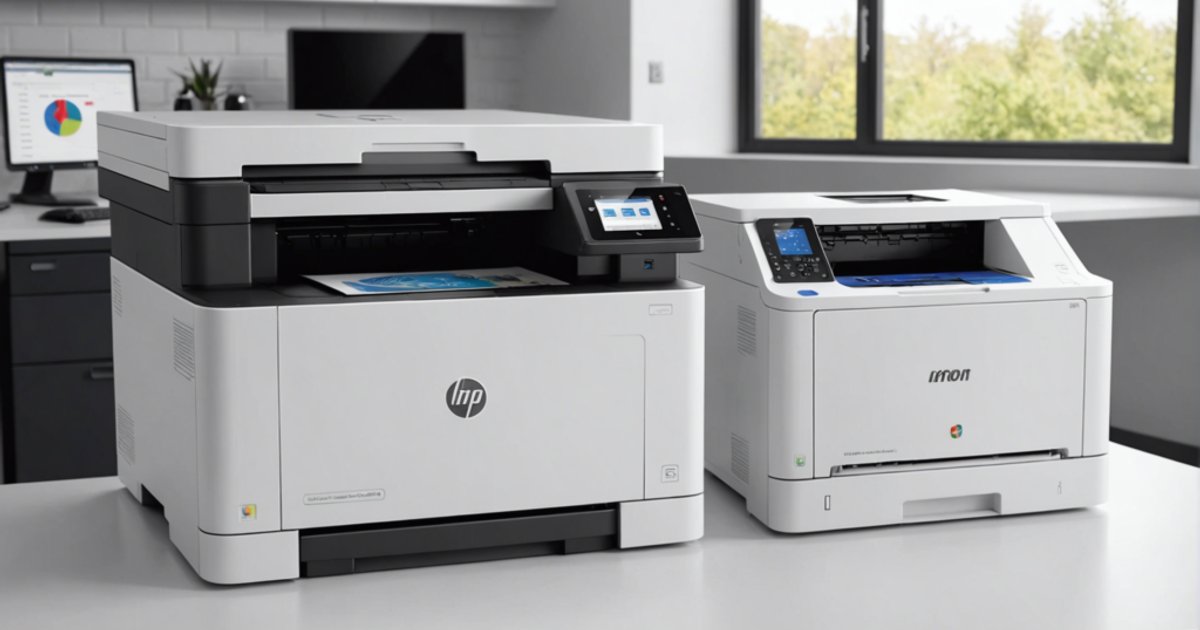
DVR and NVR: what sets them apart
A DVR (Digital Video Recorder) takes analog HD cameras over coaxial cable. The picture travels as an analog signal and the DVR digitises and compresses it. The standards are HDCVI (Dahua), HDTVI (Hikvision), AHD, and CVBS for old analog video.
An NVR (Network Video Recorder) takes IP cameras over the network. Each camera compresses its own picture and sends it as a digital stream.
On a spec sheet, XVR or hybrid DVR means a DVR that also accepts a few IP cameras. The Hikvision 2MP 4-port DVR, for example, takes 4 analog cameras plus 1 IP camera, and up to 5 IP cameras depending on the setup.
Coax: picture on the cable, power on its own
An analog HD camera needs the coax for the picture and a separate 12 V supply. Installers often pull a combined coax-plus-power cable, with a power unit next to the DVR.
Coax handles long runs well, and the Dahua DVR range lists long-distance transmission over coax. In a building that is already wired, a current DVR lets you keep the cables and replace only the cameras and the recorder.
RJ45 and PoE: one cable per camera
An IP camera plugs into a network cable. With PoE (Power over Ethernet), the same cable carries the power.
An NVR with PoE ports has a small built-in switch that powers the cameras. Check its total PoE budget: the Dahua 8-channel 8-port PoE NVR lists 72 W across all ports, the Hikvision 4-channel PoE NVR 36 W. Add up the maximum consumption on each camera’s sheet and stay below it.
The Ethernet standard limits a cable to 100 m between two devices. Past that, you need a switch in between.
| Criterion | DVR (analog HD) | NVR (IP) |
|---|---|---|
| Cable | Coax + separate 12 V power | RJ45, power over PoE |
| Who compresses the picture | The DVR | The camera |
| Accepted standards | HDCVI, HDTVI, AHD, CVBS (and a few IP on a hybrid) | IP cameras, ONVIF across brands |
| Resolution limit | The DVR’s, channel by channel | The NVR’s, plus its incoming bandwidth |
| Mixing brands | Possible if the camera’s standard is accepted | Possible through ONVIF, advanced features often limited to the same brand |
| Where it wins | Building already wired with coax, long distances | New installation, cameras with a microphone or built-in detection |
Number of channels: plan ahead
One channel means one camera. Common models have 4, 8 or 16 channels. Count the cameras you plan now, plus the ones that will follow: gate, garage, back room. Going from 4 to 8 channels later means replacing the recorder.
Read the exact line on the sheet. The Hikvision AcuSense 16-channel DVR takes 16 analog cameras plus 8 IP cameras, 24 in total. On a PoE NVR, check that the number of PoE ports matches the number of channels.
Recorder resolution and camera resolution
The recorder sets the ceiling. A 5 MP camera on a 2 MP DVR will not be recorded at 5 MP: depending on the model, it drops to a lower resolution or is not recognised. Buy a recorder at the level of your cameras, or above.
Dahua makes the same range as a Dahua 2MP 4-port DVR and a Dahua 5MP 4-port DVR, with the same inputs (HDCVI, AHD, TVI, CVBS, IP). Only the maximum recorded resolution changes.
The label 1080p Lite means a lighter recording mode, below full 1080p. The datasheet states which resolutions are recorded at full definition.
On an NVR, look at two values: the maximum resolution per camera (6 MP on the Hikvision 4-channel NVR, 8 MP on the Dahua 8-channel NVR) and the incoming bandwidth in Mbit/s, which caps the sum of all streams received. On a hybrid DVR, that figure applies to the IP channels: 20 Mbit/s on the Dahua 2MP 4-port DVR.
Hard disk: what drives the size
The hard disk is often sold separately: the Dahua 5MP 4-port DVR sheet says not included. Check the maximum capacity the recorder accepts: 6 TB, 8 TB or 12 TB depending on the models here, in one SATA bay.
How long footage is kept depends on five factors:
- Number of cameras and their resolution: more pixels, more data, camera by camera.
- Frames per second: lowering them cuts the volume, at the cost of jerkier motion.
- Compression: H.265 takes less space than H.264 for the same picture. H.265+ or H.265 Pro+ cut it further on quiet scenes.
- Recording mode: continuous day and night, or only on motion detection.
- The scene: a busy street, moving trees or night-time image noise push the bitrate up when it is variable.
To calculate, read each camera’s bitrate in Mbit/s in the menu. A bitrate of 1 Mbit/s held for 24 hours comes to about 10.8 GB. Multiply that by each camera’s real bitrate, add them up, then multiply by the number of days to keep. When the disk is full, the recorder usually overwrites the oldest footage.
Pick a surveillance-grade disk, built to write continuously.
Remote viewing: apps and connection
Each brand has its own app: DMSS for Dahua, Hik-Connect on smartphones and iVMS-4200 on computers for Hikvision. P2P connection avoids router setup: you add the device by its serial number or code and it appears in the app.
The recorder connects to the router by RJ45 cable. The upload speed of your internet line limits what you can see from outside. That is why recorders use dual streams: a full-resolution main stream for the disk, and a light sub-stream for the phone.
Human and vehicle detection cuts false alerts from headlights, animals or leaves. The Hikvision Turbo HD 8-channel DVR does this sorting, and the AcuSense 16-channel DVR adds perimeter protection.
When to choose Wi-Fi cameras without a recorder
For one or two cameras, a Wi-Fi camera such as the IMOU Bullet 2E 3MP can be enough. It records to its own microSD card (up to 512 GB) and sends alerts to your phone.
Its limits: it still needs a power outlet, a good Wi-Fi signal where it is mounted, and the microSD card leaves with the camera if it is torn down. Beyond that, or if footage must stay safe inside the building, a wired recorder is the safer choice.
Our advice
- Building already wired with coax: keep the cables and move to a current DVR such as the Dahua 5MP 8-port DVR, with HDCVI or TVI cameras of the same resolution.
- New installation, home or shop: a PoE NVR. The Hikvision 4-channel NVR for four cameras, the Dahua 8-channel NVR beyond that, with PoE IP cameras such as the Dahua 4MP Bullet IPC-B1E40.
- More than 8 cameras: the Hikvision AcuSense 16-channel DVR, which keeps 8 IP inputs for later expansion.
- One or two cameras, no cabling work: Wi-Fi cameras with a microSD card.
- In every case: buy the hard disk with the recorder, sized from the real bitrate and the retention you want, and leave at least one channel free.
The full range is in the DVR and NVR video recorders category.