A farm with no meter, a building site, a country house closed half the year, a warehouse far from any phone line: the need is the same. You want to see the place from your phone and get an alert when someone walks in, with no socket and no internet box on site.
Two problems need solving separately. Power first: a solar panel and battery, or mains where it exists. Then the connection: existing Wi-Fi, a 4G SIM card inside the camera, or a 4G router serving several cameras. This guide compares the setups, then the points that make a remote install fail: a badly aimed panel, a flat battery in winter, a used-up data plan, no microSD card.
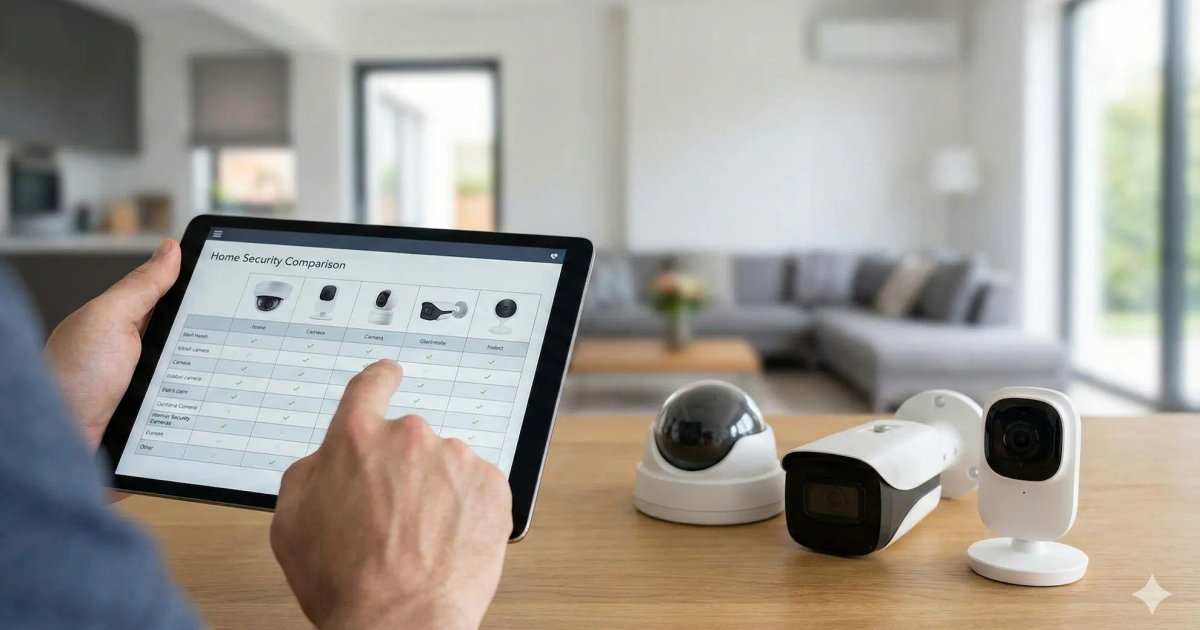
Four setups for a remote site
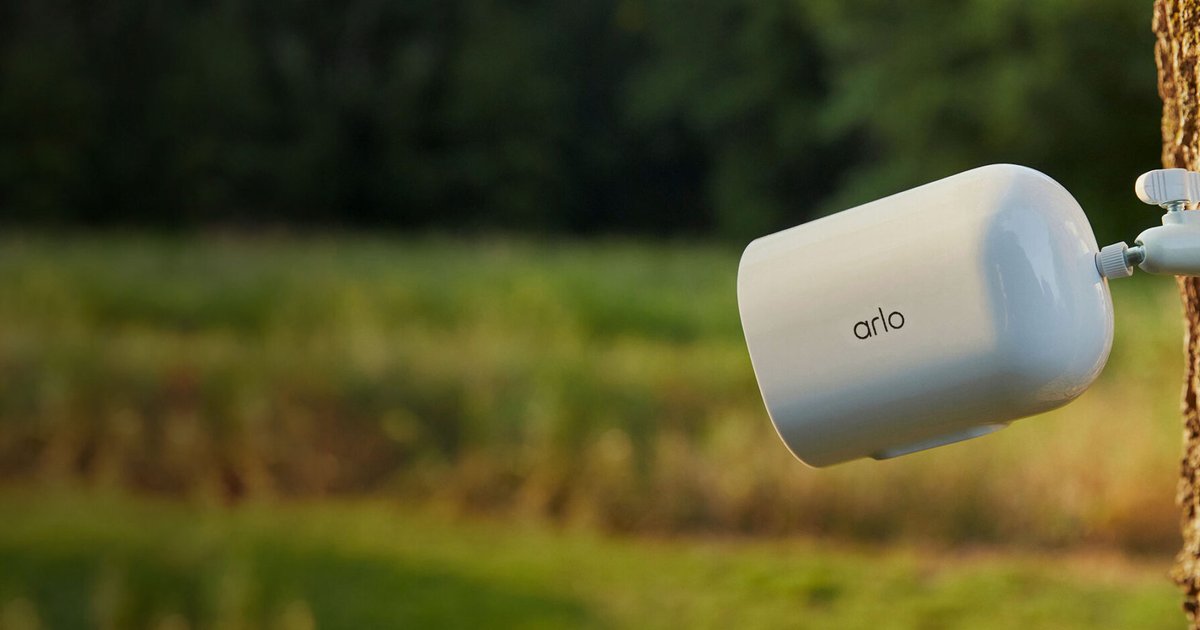
Solar battery camera on Wi-Fi
The panel charges a built-in battery. The camera sleeps and wakes up on motion. It needs a 2.4 GHz Wi-Fi signal that reaches it. That fits a holiday home that already has a box, when you do not want to run a cable to the gate.
The Tapo C410 solar battery kit works this way: 2K image, panel included, microSD up to 512 GB. TP-Link quotes up to 180 days on battery alone. That is a maker figure: a camera facing a busy path wakes up far more often and will last less.
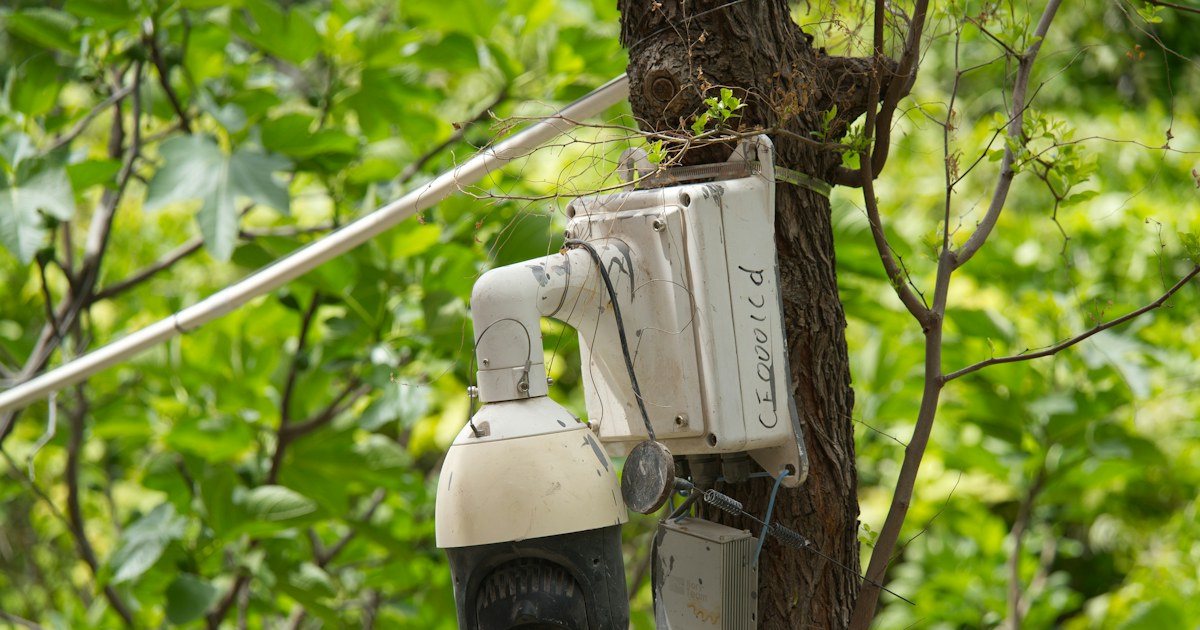
Solar 4G camera with a SIM card
No Wi-Fi at all: the camera carries a 4G modem and a SIM card. This is the setup for a building site, farmland or a barn with no electricity.
The Hikvision solar 4G PT dual-lens 4+4 MP camera runs on 4G only, with a Nano SIM, an 8 W panel and a 9000 mAh battery. The IMOU AOV Dual 10MP solar camera takes both 4G and Wi-Fi, with one fixed and one motorised lens. Both record in AOV mode (Always On Video): video runs continuously at a reduced frame rate to save battery, instead of filming only on detection. Other models are in the solar security cameras category.
4G camera on mains power
The warehouse has electricity but no internet line. The IMOU Cruiser SC 5MP 4G camera takes a SIM card or an Ethernet cable and pans 355°. More models are in the 4G security cameras category. Plan one SIM and one data plan per camera.
4G router with Wi-Fi or PoE cameras
Once there is power and more than two cameras, a single 4G router is simpler: one SIM, one plan, every camera on it. The TP-Link TL-MR100 4G router takes a Micro SIM, has two detachable 4G antennas, one LAN/WAN port and one LAN port, and handles up to 32 devices. Wired IP cameras can also go through a PoE switch and an NVR plugged into this router (see our DVR or NVR guide).
The pocket hotspots in the 4G routers category have a 2100 to 3000 mAh battery. It is made for travel, not to last for days. On a fixed site, keep them plugged in.
| Setup | Power | Internet | Where it wins | Limit |
|---|---|---|---|---|
| Solar Wi-Fi | Panel + battery | Existing 2.4 GHz Wi-Fi | Holiday home with a box | Wi-Fi range to the camera |
| Solar 4G | Panel + battery | SIM in the camera | Building site, farm, bare land | 4G coverage, one plan per camera |
| 4G on mains | Mains | SIM in the camera | Warehouse with power, one camera | No video during a power cut |
| 4G router + cameras | Mains | One SIM for the whole site | Several cameras, NVR | The router must stay powered |
Aiming the panel and counting sun hours
In Morocco, as everywhere in the northern hemisphere, the panel faces due south. A tilt close to the local latitude, about 30° in Agadir and 35° in Tangier, is a good year-round compromise. In winter the sun is lower: a slightly steeper panel catches more.
- Shade matters more than wattage. A branch, a pole or a roof edge over part of the panel is enough to cut charging sharply.
- Split camera and panel if needed. The camera goes where it sees well, the panel where it gets sun. Check the length of the supplied cable before drilling.
- Clean the surface. On a building site or farmland dust settles fast and lowers output.
An 8 W panel only gives 8 W in full sun, facing the light. The useful measure is peak sun hours: a cloudy winter day brings far fewer than a summer day. To compare, convert the battery to energy: 10,000 mAh at 3.7 V is about 37 Wh. With an 8 W panel and, for example, 3 peak sun hours, charging tops out at 24 Wh a day before losses.
Battery life in winter
Winter stacks the problems: short days, low sun, several cloudy days in a row. The battery has to bridge that gap. In areas that freeze, such as the Middle Atlas, cold reduces the usable capacity of a lithium battery and limits its charging.
Settings weigh as much as hardware:
- Limit detection to useful zones (door, gate, path) to avoid wake-ups from a road or trees.
- Shorten clips, lower sensitivity and limit time spent in live view.
- The spotlight for colour night vision uses power: infrared is often enough on a quiet site.
- In the first month, check the battery level in the app every week.
4G data usage
Recording to the microSD card uses no data. What does: live view, remote playback, notifications with an image and cloud uploads. The maths is simple: a 1 Mbit/s stream watched for one hour is 450 MB.
- Test coverage before buying. With a phone on the same operator, at the exact spot and mounting height, check that 4G comes through and holds.
- Turn off the SIM PIN code in a phone before inserting the card: the camera cannot type it.
- Track when the plan expires. One missed top-up and the camera drops out of the app.
- Weak signal at the router: 5 dBi SMA 4G antennas replace the stock antennas if the router has SMA connectors. Check that on its spec sheet.
Local storage on microSD
On a site without stable internet, the microSD card is the real memory of the system. All the solar and 4G cameras named here take up to 512 GB. In AOV mode the camera writes continuously and overwrites the oldest footage when the card is full. Pick a card made for continuous writing (our guide to microSD card classes explains U3, V30 and endurance).
If the camera is stolen, the card goes with it. Mount it high, out of hand reach, and keep important clips on your phone or in the maker’s cloud when one is offered.
What about solar kits?
The solar kits in the shop are lighting kits: two or three LED lamps, radio, phone charging, with 3 to 3.2 W panels. They light a farm room or a guard’s hut and charge a phone. They are not sized to run a 4G router and a camera around the clock. A solar camera comes with its own panel.
Our advice
- Holiday home with a box: a solar Wi-Fi camera such as the Tapo C410 kit, mounted within Wi-Fi range.
- Building site, farm or land with no network: a solar 4G camera (Hikvision PT or IMOU AOV Dual), after a coverage test on site.
- Warehouse with power, one view: a 4G camera on mains such as the IMOU Cruiser SC.
- Warehouse with power, several cameras: one 4G router with Wi-Fi or PoE cameras on a single plan.
- Shaded site or freezing area: move the panel into the sun and watch the battery for a week before fixing the camera for good.